A niche blog dedicated to the issues that arise when supplementary protection certificates (SPCs) extend patents beyond their normal life -- and to the respective positions of patent owners, investors, competitors and consumers. The blog also addresses wider issues that may be of interest or use to those involved in the extension of patent rights. You can email The SPC Blog here

Showing posts with label paediatric extension. Show all posts

Tuesday, 3 October 2017

Switzerland and paediatric extensions - an update

Switzerland is slowly moving towards amending its patent legislation to allow for paediatric extensions in the context of a revision of the Swiss law on pharmaceutical and medicinal products.

The changes in the Swiss Patent Act to allow for pediatric extensions have already been approved by the Swiss parliament in 2016.  The changes allow for:
• Pediatric extensions to SPCs under conditions like in the EU; and
• Independent paediatric SPCs linked directly to the term of the patent, in cases where there is no regular SPC. 
According to the Swiss Federal Institute for Intellectual Property website (here), amendments proposed to the implementing regulations of the Swiss Patent Act are currently under a general consultation which will end on 20 October 2017. 

The aspired date for the entry into force of the amended Patent Act and the implementing regulations is January 1, 2019.  However, a more likely date is looking like mid-2019.

Many thanks to Claudia Bibus and Siegfried Grimm at E. Blum and Co. as well as Nick Bassil at Kilburn & Strode for providing this information!

Friday, 23 June 2017

Paediatric Extensions in Norway

The SPC Blog is grateful to Arne Lund Kverneheim at Bryn Aaflot for the following news on paediatric extensions in Norway:
"Paediatric extensions in Norway will be implemented and available from 1 September 2017. This means that SPCs with expiry dates later than 1 March 2017 will be entitled to extensions provided that the application for the extension is submitted according to the requirement in the regulation or in the transitional regulations. 
The background for the amendments in the Norwegian Medicines Act and the Patent Law is in the EEA committee decision of 5 May 2017 (92/2017) adapting the SPC regulation 1768/92 - 469/2009 to include the EEA states. 
The implication is that any SPC in Norway with expiry date later than 1 March 2017 is entitled to paediatric extensions. The maximum duration of the protection will however be no longer than 6 months after the expiry of the SPC. 
RequirementsThe requirement in Norway will be the same as in EU member states.  Application forms in Norwegian and English will be provided by NIPO. 
NIPO will allow receipt of applications for paediatric extensions from 1 August 2017. The extension will be in force when the application is made public and after implementation of the regulation. 
DeadlinesThe normal deadline to apply for a paediatric extension is 2 years prior to expiry of the SPC. However, in a transition period of 5 years after implementation, which is until 1 September 2022, the deadline is 6 months prior to expiry of the SPC. 
Please note that an application for an extension will not prevent any third party who, between the expiry of the certificate and the publication of the application for an extension, in good faith has commercially used the invention or made serious preparation for such use, to continue such use. 
ExamplesThe transition regulations for SPC with an expiry close to the implementation can be interpreted with the following examples and timeline:
  • SPC expiry 1 April 2017
entitled to a 1 month extension from 1 September 2017 (until 1 October 2017)
applicable from 1 August 2017
  • SPC expiry 1 June 2017
entitled to a 3 months extension from 1 September 2017 (until 1 December 2017)
applicable from 1 August 2017
  • SPC expiry 1 November 2017
entitled to a 6 months extension (until 1 May 2018)
apply by 1 October 2017
  • SPC expiry 1 June 2018
entitled to a 6 months extension (until 1 December 2018)
apply by 1 December 2017"

Many thanks to Arne again!

Friday, 13 March 2015

No paediatric extension when conditions are not met before SPC expires

In BL O/098/15 Otsuka Pharmaceuticals Company Limited's application, 4 March 2015, Dr Lawrence Cullen, for the United Kingdom's Intellectual Property Office (UKIPO), held that it was not possible to grant an application for a paediatric extension for patent protection when the conditions for establishing one's entitlement to a paediatric extension -- the completion of investigations relating to paediatric indications and the issue of an updated marketing authorisation  -- had not been fulfilled before the expiry of the SPC.

Otsuka, who had an SPC for ‘aripiprazole or a salt thereof’, used in the treatment of schziphrenia and bipolar affective disorder, was unsuccessful in securing a paediatric extension. In reaching his decision, Dr Cullen distinguished the earlier and authoritative decision of the Court of Appeal for England and Wales in EI du Pont de Nemours & Co v UKIPO [2009] EWCA Civ 966 [on which see The SPC Blog post here and note by Sebastian Moore and Jonathan Turnbull here], on the basis that, in that case, while the requirements for an extension had not been met at the date of application, they had still been met before the date of expiry of the related SPC and it was the case that matters in relation to the extension of an SPC had to be decided before that SPC expired. This was so even if the decision was taken on the last day of the SPC's existence because, once the SPC expired, others were entitled to enter the market and the interest of third parties (i.e. generic pharmaceutical companies) had to be taken into account.

In Dr Cullen's own words:
"55 I accept that the applicant has to carry out the studies in the paediatric population first and get approval from the EMEA. This involves a commitment of time and resources up front. I accept that if the applicant carries out the necessary steps, then they should be entitled to the reward without taking too restrictive a view of how and when the applicant meets the requirements to qualify for an extension to the SPC.

56 However, I do not take this to mean that this should extend beyond the expiry date of the SPC. I think that it is reasonable to expect that matters in relation to an extension to an SPC are decided before the SPC expires, even if this decision is taken on the last day of the SPCs existence! Once the SPC expires, others are entitled to enter the market. Because of this, I think that, after the expiry date of the SPC, one must take account of the interest of third parties. Knowing when the SPC will expire is important for the entry of third parties, such as generic medicine companies, into the market because once the SPC expires; they are free to bring their own versions of the medicines comprising this active ingredient to market. If an application for an extension to a granted SPC was still considered to be capable of rectification after the expiry date of the SPC and the grant of an extension could be back-dated, this would, in my view, introduce uncertainty and, even, the potential for abuse. It would not be clear in such a situation when the paediatric studies would have to be completed by and when the updated MA would be available. There needs to be some clarity as to when matters are complete and others can enter the market. This seems to me to represent an appropriate balance, as referred to in recital 10 of the SPC regulation, to take account of all the interests at stake “in a sector as sensitive and complex as pharmaceuticals” while also making sure that research into paediatric uses of medicines is given the necessary incentive".
An applicant for a paediatric extension has 28 days in which to appeal.

Tuesday, 4 November 2014

Specific Mechanism applies to paediatric extensions, says Danish Court

From Martin Dræbye Gantzhorn (Partner, Head of Life Science & Healthcare, Horten Advokatpartnerselskab, Copenhagen) comes this swift, short note to inform readers of The SPC Blog that in October the Danish Maritime and Commercial Court rendered a very rare decision on the scope of the "Specific Mechanism". The proceedings concerned the question whether a paediatric extension to a SPC will also prolong the patentee's protection under the "Specific Mechanism". In short:
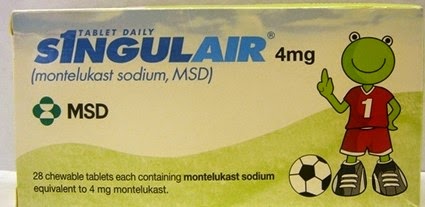
The defendant (Orifarm) had imported a pharmaceutical product, MSD’s Singulair, from Poland during the term of the paediatric extension of the SPC. The plaintiff brought interlocutory injunction proceedings, claiming that such imports could be prohibited relying upon the "Specific Mechanism".

As its primary line of defence, the defendant held that the paediatric extension did not prolong the protection conferred by the "Specific Mechanism". As its second line of defence, the defendant held that, even if such protection could be conferred by a paediatric extension, such extension would only be applicable to those of the plaintiff's products which -- by their strength -- were indicated for children.

The Bailiff's Court (the court of first instance) held that the patent, the SPC and the paediatric extension thereof were to be considered as a single coherent right that covers all products and not just the ones authorized for the treatment of children. Accordingly, the Bailiff's Court found for the plaintiff.

The Maritime and Commercial Court agreed with the Bailiff's Court, stating that the expression "such protection" under the Specific Mechanism as stated in the Treaty of Accession is to be interpreted as the patent protection being one continuous string of protection. The Maritime and Commercial Court added that the paediatric extension is not dependent on a product being indicated for the treatment of children, but only on whether or not the drug is tested for children.

The protection would not therefore terminate until the paediatric extension had expired.
The judgement (in Danish) can be found here.

Thanks, Martin, for this really helpful summary.

Thursday, 8 May 2014

Swiss paediatric extensions: a swift answer from the "crowd"

Following this morning's blogpost calling for a crowd-sourced response to a plea for information as to where Switzerland currently stands with regard to paediatric extensions, we have received the following response from a two-man crowd consisting of Simon Holzer & Kilian Schärli (meyerlustenberger | lachenal Rechtsanwälte) who write:
Crowds of Swiss Rechtsanwälte gather round to answer
readers' questions -- but Simon and Kilian were first!
On 7 May 2014, the Swiss National Council adopted the revision of the Swiss Therapeutic Products Act (see excerpt of the Official Bulletin of the National Council of 7 May 2014 [in German and French only]). The legislative proposal now goes to the Council of States. The Federal Office of Public Health, which is leading the revision of the Therapeutic Products Act, expects that the revised version will come into force on 1 January 2016. 
With regard to transitional provisions the new Art. 140o of the Swiss Patent Act stipulates that the application for the paediatric extension can be filed no earlier as with the application for the grant of an SPC and no later then two years before the expiry of the SPC, but no later than six months after the first authorization to place the product on the market as a medicinal product in the European Economic Area with the exception of the Principality of Liechtenstein, and only if the associated medicinal product information reflects the results of all studies that have been carried out in compliance with the paediatric investigation plan considered during the marketing authorization. Further, the new Art. 140s para. 2 sets forth that for the procedure (as well as for the register and for the publications) the rules of the European Union shall be taken into account. 
More information can be found on the following websites:
  • Federal Office of Public Health, here
  • Swiss Agency for Therapeutic Products, here
  • Swiss Federal Institute of Intellectual Property, here
Thanks so much, Simon and Kilian -- this is really helpful!

Swiss paedriatric extensions: where are we now?

One of our readers has asked if he might use the good services of this weblog in order to crowd-source the following question:
What is the legislative status of the Swiss law that is intended to introduce paediatric extensions, similar to the existing EU law?
He tells us that the most recent information he has been able to find on the internet about it is from July 2013. So, he wonders, when is the law going to be introduced, and are any transitional provisions intended?

If you have any current information and don't mind sharing it, we'd be delighted to know -- and so would our reader.

Thursday, 20 December 2012

Lipitor paediatric extension surprise: judge doesn't refer questions to CJEU

Dr Reddy's Laboratories (UK) Ltd & Another v Warner-Lambert Company LLC [2012] EWHC 3715 (Pat) is a Patents Court for England and Wales ruling of Mr Justice Roth -- who is not one of the usual Patents Court judges [though it seems that he is now officially a Patents Court judge: see the Comment posted below this article]. This action however required the judge to exercise purely legal skills rather than to possess technical knowledge of the field in which the patent had been granted.

In brief, Pfizer applied for and was granted a paediatric extension for Atorvastatin (Lipitor). Dr Reddy's challenged the grant of the paediatric extension on three grounds:
(1) The European Medicines Agency (EMA) acted ultra vires it powers under the Paediatric Regulation by approving a paediatric investigation plan (PIP) that let Pfizer to defer completion of the third of its three required studies. The circumstances in which studies in a PIP may be started but not finished are expressly defined by the Regulation and must be covered by a deferral under Article 20. No such deferral was applied for by Pfizer or granted in this case. Accordingly, the PIP was not lawfully approved under the Paediatric Regulation and Pfizer was therefore not entitled to the extension.  
(2) Under Article 45(3), a paediatric extension should be granted only when significant studies contained in the PIP have been completed. Here, none of the relevant bodies made an assessment as to whether either of the two studies which had been completed was significant; and, on the facts, they were clearly not significant.  
(3) Even if, contrary to ground (1), it was legitimate for the EMA to approve a PIP that required the initiation but not the completion of the third study, under Article 36 Pfizer was not entitled to a paediatric extension unless it included, within its application for a marketing authorisation, the results of the completed third study.
The learned judge dismissed all three challenges, describing the third as "misconceived", and declined to follow what seems almost standard practice these days when he decided that there was no need to make a reference to the Court of Justice of the European Union relating to the second ground.

The decision is quite long -- some 76 paragraphs -- and would have benefited from being just a little bit longer, if Roth J had added a short paragraph at the end which summarised what he actually decided.

Thursday, 6 September 2012

Paediatric poser: can you help?

One of these is a device for
achieving Swiss paediatric
extensions -- but which is it?
A reader has emailed The SPC Blog to ask the following question:
"Does anyone have any up-to-date information on the possibility of Switzerland introducing paediatric extensions to its SPC system? The last I heard was there was draft legislation along the same lines as the EU’s legislation --  but is there an expected date for its entry into force yet? And do we know what transitional provisions there will be for obtaining extensions of SPCs that are close to expiry (e.g. the extension request must be filed at least 6 months before expiry, as was originally the case in the EU)?"
It would be much appreciated if one of our better-informed readers (of which we have many) could set our reader right.

Monday, 11 July 2011

Grape-flavoured Lipitor gets the go-ahead for children

The Financial Times reported yesterday that pharma giant Pfizer could earn an estimated US$800m following the grant of a six-month paediatric extension to its top-selling drug Lipitor. The children's version is described as "a chewable grape-flavoured low-dose version" which will be launched when its patents expire in November.

The Financial Times article goes on to discuss its assessment of the market value of Lipitor, which currently accounts for one-fifth of Pfizer's sales.

Source: "Pfizer gets $800m boost for Lipitor", Andrew Jack, 10 July 2011

Thursday, 14 October 2010

Paediatric Extensions in European Countries

We recently posted a compilation of data by Martijn de Lange on drugs that had positive opinions on compliance with PIPs along with information on the corresponding SPCs in the Netherlands. Alice de Pastors has now supplemented this data with the status of paediatric extensions for selected drugs in different European countries:

1. Caspofungin
EU market authorization for Cancidas from Merck Sharp & Dohme Inc.

Paediatric extensions for caspofungin SPC
- Extensions granted until 23 or 24 April 2017 in Austria, Germany, Denmark,
France, The United-Kingdom, Greece, Ireland, Italy, The Netherlands, Sweden,
Slovenia;
- Extensions pending in Belgium, Finland, Portugal (possible expiry date
24 April 2017), Czech Republic (6 September 2017), Slovakia (7 July 2018)
- No extension data available for Bulgaria, Spain, Hungary, Luxembourg, Norway,
Poland, Romania (NO SPC pending)
- No SPC for Cyprus, Estonia, Iceland, Latvia, Lithuania, Malta.

5. Zoledronic acid
EU market authorization for Zometa from Novartis Europharm Limited

Paediatric extensions for zoledronic acid SPC
->for Novartis patents filed in November 1987 (EP275821)
- Extensions granted until 15 or 16 May 2013 in Germany, France, The United-
Kingdom, The Netherlands, Sweden, Denmark (20 May 2013),Ireland (19 May 2013),
Slovenia (8 October 2013);
- Extensions pending in Austria, Belgium, Italy (possible expiry date 16 May
2013), Finland (17 May 2013);
- No extension data available for Cyprus, Spain, Greece, Hungary, Luxembourg,
Norway, Portugal, Romania;
- No SPC in Bulgaria, Czech Republic, Estonia, Iceland, Latvia, Lithuania, Malta,
Poland.

-> for basic patent EP 258618 to Roche Diagnostics GmbH
No extension data available.

6. Losartan
National market authorization for Cozaar from Merck Sharp & Dohme Inc.

Paediatric extensions for losartan SPC
Extensions granted until 1 or 2 March 2010 in Austria, Belgium, Germany,
Denmark, Finland, France, The United-Kingdom, Ireland, Italy, The Netherlands,
Sweden, until 1 December 2010 in Latvia;
- No extension data available for Cyprus, Luxembourg, Norway.
- No SPC in other EU countries.

10. Valsartan
National market authorization for Diovan from Novartis Europharm Limited

Paediatric extensions for valsartan SPC
- Extensions until 12 November 2011 granted in The Netherlands, Sweden;
- Extensions pending in Germany, Denmark, Finland, The United-Kingdom,
(possible expiry date 12 or 13 November 2011);
- No extension data available for Austria, Belgium, France, Ireland, Italy,
Luxembourg, Latvia, Norway, Portugal;
- No SPC in other EU countries.

7.Anastrozole
National market authorization for Arimidex from AstraZeneca AB

Paediatric extensions for anastrozole SPC
- Extensions until 10, 11 or 12 February 2011 granted in Austria, Belgium,
Germany, Denmark, Finland, France, The United-Kingdom, Ireland, Italy, The
Netherlands, Sweden;
- No extension data available for Luxembourg, Norway.
- No SPC in other EU countries.

8.Abatacept
EU market authorization for Orencia from Bristol-Myers Squibb Pharma

Paediatric extensions for abatacept SPC
- Extensions until 15 or 16 December 2017 granted in Austria, Germany,
Denmark, The Netherlands, Ireland (30 December 2017);
- Extensions pending in Belgium, Finland, France, The United-Kingdom (possible
expiry date 15 or 16 December 2017);
- No extension data available for Cyprus, Spain, Greece, Hungary, Italy, Lithuania,
Luxembourg, Latvia, Norway, Portugal, Sweden, Slovenia.
- No SPC in other EU countries.

Wednesday, 3 March 2010

New note on DuPont application for losartan

A Current Intelligence note on EI Du Pont Nemours & Co. v United Kingdom Intellectual Property Office [2009] EWCA Civ 966, 17 September 2009, by Sebastian Moore and Jonathan Turnbull (Herbert Smith) and entitled "Paediatric extension applications: substance and timing" appears in the current issue of the Journal of Intellectual Property Law and Practice (JIPLP). You can read this note in full on JIPLP's weblog here.

Friday, 14 August 2009

IPI initiative on paediatric inconsistencies links patent offices

For what may well be the first time in its history, the lead article in the August Newsletter of the Intellectual Property Institute (IPI), London is about SPCs -- and indeed about the particularly live issue of paediatric extensions. The text runs as follows:
"Paediatric Extensions to Supplementary Protection Certificates

The Institute has been in discussion with a number of stakeholders about present legal uncertainties surrounding applications for the 6-month paediatric extension to a supplementary protection certificate. In order to express concerns that have been expressed about the implementation of the scheme for the examination of applications for paediatric extensions, the Institute convened a meeting at the European Patent Office in The Hague. Delegates included representatives from patent offices all over Europe, officials from the regulatory agencies, and industry (the users).

Genevieve Michaux, a regulatory expert from Covington and Burling LLP, set the scene by outlining the current, rather complex provisions, and there followed an extensive round table discussion among the delegates under the Chatham House rule.

A full report of the meeting will be issued at a later date, but one key issue arising from the meeting was the fact that there were differing views among the national patent offices concerning the documents to be submitted upon filing an application for an extension. It was argued that the end of procedure notification should sufficiently demonstrate the approval of a paediatric product in all Member States. However, the notification is not currently set out in a standard form and it may not include some of the information needed by the national patent offices: it was clear that it would be very useful to develop a common format for this document. This was just one of a number of issues discussed at the meeting which we will be following up in due course".
The IPI should be commended for taking this initiative. It is a small organisation with few resources, yet it selflessly takes on tasks for the benefit of the wider community. Readers whose companies would like to participate in or otherwise support the work of the IPI, which has charitable status, should email its Director, Dr Paul Leonard, here or telephone him on +44 20 7436 3040.

Monday, 29 June 2009

Paedriatric extensions: note on Merck

Writing in the Oxford University Press monthly Journal of Intellectual Property Law & Practice 2009 4: 457-459, Professor Dr Ulrich M. Gassner has produced a helpful note, "Paediatric extensions: the requirement of a compliance statement", on the decision in Merck and Co., Inc. [2008] BL O/035/08, UK IPO, 6 February 2009 (see also the posting on The SPC Blog here). According to the abstract,
"Taking a narrow interpretation of what is meant by a statement indicating compliance with an agreed completed paediatric investigation plan (PIP), the UK Intellectual Property Office has held that a valid application for a paediatric extension must include an authorization containing such a statement and that therefore a positive opinion of the Paediatric Committee of the EMEA, as such, is not suitable as a means to meet this requirement".
The SPC Blog is taking steps to get permission from the publishers to make this note available to its readers.

Friday, 17 April 2009

Losartan paediatric extension refused in UK

The attention of The SPC Blog has just been drawn to a decision of the Intellectual Property Office in the UK, summarised here and downloadable in full here, in which hearing officer Dr Cullen refused an application for a paediatric extension in respect of an SPC granted on 13 October 1995 in force from 9 July 2007. The active ingredient for which the SPC was granted was Losartan, as a potassium salt, used in treating hypertension in humans through its action as an antagonist of the angiotensin II receptor. The product was marketed in the UK under thevbrand name COZAAR by Merck & Co., Inc., a licensee under the SPC.

According to the IPO's summary,
"An application for a paediatric extension of granted certificate SPC/GB/95/010 was filed. The preliminary view of the examiner was that this application did not meet the requirements of Article 8(1)(d)(i) of Regulation (EEC) No. 1768/92 as it did not include a copy of the statement of compliance with an agreed completed paediatric investigation plan as referred to in Article 36(1) of EC Regulation (EC) No. 1901/2006. This view was upheld by the Hearing Officer who considered the relevance of Articles 8, 23, 24, 29 and 36 of Regulation (EC) No. 1901/2006 and IPO decision BL O/035/09 (Merck & Co. Inc) [see SPC Blog note here for comment and link to the decision]. He further found that the application did not fulfil the condition of Article 8(1)(d)(ii) of Regulation (EEC) No. 1768/92 to prove that the product was approved for use in all EU member states. This he found to be an explicit requirement under Article 36(3) when the Mutual Recognition Procedure (MRP), as set out in Articles 32-34 of Directive 2001/83/EC, is used to gain approval for variation of the marketing authorisation. The documents supplied, a commission decision under Article 29 of Regulation (EC) No. 1901/2006, a preliminary variation assessment report from the national competent authority of the reference member state and an opinion from the Paediatric Committee of the European Medicines Agency (EMeA) on compliance with an agreed completed paediatric investigation plan were not sufficient to meet the requirements under Article 36 of Regulation (EC) No. 1901/2006 regarding a statement of compliance with an agreed completed paediatric investigation plan and that the product was approved for use in all EU member states".
The full decision is 25 pages long and I've not yet had a chance to read it in full, so the blog will return to it soon for fuller discussion and analysis.

Wednesday, 4 March 2009

Paedriatric extensions article now available

The SPC Blog thanks Leighton Howard (right) for making this PDF version of his article "Practicalities of paediatric extensions to the Supplementary Protection Certificate" (see earlier post here) to the blog's readers. Leighton adds:
"Please bear in mind that this was written about 4-5 months ago, but only recently published. I had another read through it and most of it seems relevant, although maybe a little dated but I’ll let others make that decision".
Leighton is currently writing an article on multiple SPCs applied for/granted per INN –- he promises to let us know as soon as he is allowed to publish it. He also welcomes comments which readers may have. You can post them below or send them directly to Leighton here.

Monday, 2 March 2009

Practicalities of paediatric extensions -- a recent article

I've just spotted details of a recent article, "Practicalities of paediatric extensions to the Supplementary Protection Certificate", by Leighton Howard (Genericsweb Pty Ltd), which was published in the Journal of Generic Medicines, Volume 6, Number 1, November 2008 , pp. 93-96(4).  I've not seen the article, but the author is described as "a patent information expert with extensive generics experience. He has worked within the professional patent information industry and major generic pharmaceutical firms and now provides consultancy services to the generics industry and government organisations via his company XIP Pty Ltd. He is also the founder of Genericsweb and remains instrumental in maintaining the high quality and accuracy of data contained in Pipeline Patent Intelligence".

The full electronic text is available here at the price of $40 plus tax.

Monday, 23 February 2009

First paediatric extension application filed in Denmark

In October 2008 the first application for extension of a supplementary protection certificate under Regulation 1901/2006 on Medicinal Products for Paediatric Use was filed in Denmark. The filing took place before the Danish Patent and Trade Mark Office had even issued a request form and formal guidelines regarding supplementary protection for medicinal products for paediatric use, but it was still in accordance with the amended patent regulations that entered into force on 1 May 2008. In addition, the filing took place before the Danish Agency for Governmental Management had approved the official fee for such types of application. 

[Source: note by Casper Struve and Ellen Wetke (Zacco) for Intellectual Asset Management magazine].

Monday, 16 February 2009

Get your paperwork in order, Merck told

The SPC Blog has just received news of Lawrence Cullen's decision last week in Merck & Co., Inc's application, Case O/035/09, 6 February 2009. 

In short, this was an application for an extension to the duration of granted a granted supplementary protection certificate, SPC/GB/02/002. The active ingredient for which the SPC was granted was Caspofungin, an antifungal agent for human use which Merck marketed as Cancidas. This application was made under Article 7 of Regulation 1768/92 to obtain the reward provided under Article 36(1) of Regulation 1901/2006 for completing studies on medicinal products in the paediatric population. 

The preliminary view of the examiner was that this application did not meet the requirements of Article 8(1)(d)(i) of Regulation 1768/92 since it did not include a copy of the statement of compliance with an agreed completed paediatric investigation plan, as referred to in Article 36(1) of EC Regulation 1901/2006. This view was upheld by the Hearing Officer, who considered the relevance of Articles 8, 23, 28 and 36 of Regulation 1901/2006 in deciding if Merck's documents fulfilled the requirement of Article 8(1)(d)(i) of Regulation 1768/92. 

An opinion of the Paediatric Committee of the European Medicines Agency (EMeA) on compliance with an agreed completed paediatric investigation plan was considered not to be sufficient as a statement of compliance with an agreed completed paediatric investigation plan: what is needed is a copy of an updated marketing authorisation granted by a competent authority under Regulation 1901/2006. 

At para 43 of his decision Mr Cullen says:
"In their written submission, the applicant argued that if it was necessary to wait until they could furnish evidence of a granted updated or varied marketing authoristion to apply for the 6 month SPC extension for products that are already covered by an SPC rather than doing so on the basis of the opinion on compliance of the Paediatric Committee, they are in danger of being denied the reward for doing the paediatric studies through no fault of the applicant but rather because of the time taken by the competent authority to process the application and grant the update marketing authorisation. However, in my view the reward is not only based on completing an agreed PIP, it is also based on making sure that information regarding the use of medicinal products in the paediatric population is made available and improved and this achieved by including this information in the marketing authorisation and in the SmPC and, where relevant, the product & labeling information. This is illustrated for example by recital (28) of EC Regulation 1901/2006. Thus there would seem to a valid reason why it is necessary to wait until the varied marketing authorisation is granted. However, I do have some sympathy with the concern expressed by the applicant in relation to the impact of delays beyond their control in obtaining updated granted marketing authorisations from a competent authority and the need make an application for an SPC extension prior to expiry of the original granted SPC. Article 7(4) and 7(5) of EC Regulation 1768/92 require that the application for an extension to the SPC must be lodged before expiry of the original SPC. For the period of 5 years after EC Regulation 1901/2006 enters into force, the application must be made 6 months before the SPC expires, thereafter, the application must be lodged 2 years before the SPC expires. I do not think that it can be one of the intended consequences of this Regulation that the time taken by the competent authority to process the application and grant the update marketing authorisation should prevent an applicant from being able to obtain a reward for carrying out an agreed completed PIP and making the information on its outcomes available".
Merck was allowed a period of time within which to rectify the irregularity in its application.

Monday, 9 February 2009

The Commission's view on paediatric extensions

Recently, the Commission sent the official records of the 3rd meeting of national SPC experts held on 26 September at the EMEA to national patent offices. This meeting was mainly devoted to the implementation of paediatric extensions. The records are particularly interesting to those who are involved with the administrative implementation of Regulation 1901/2006. Some national patent offices, such as the German PTO, have yet started a consultation procedure to discuss with representatives of industrial pharmaceutical associations administrative issues, such as the format of proofs.

As regards the contents of the records it is somewhat disappointing that, by and large, the Commission takes a rather formalistic approach, even when the wording of the provisions seems to be quite clear. This is especially true with respect to Article 36.3 of Regulation 1901/2006 and Article 8.1.d.ii of Regulation 1768/92. When the wording is somewhat ambiguous, as in Article 36.1 of Regulation 1901/2006 and Article 8.1.d.i of Regulation 1768/92, the result is the same. The Commission seems to apply the maxim "in dubio contra paediatric extension".

Consequently, this basic incentive will be devaluated. Of course, such tendencies of strict interpretation undermine the very aims of the Regulation 1901/2006. It remains to be seen if the national patent offices are able and willing to practise the relevant provisions in a more flexible way, e.g., by using the instrument of Article 10.3 of Regulation 1768/92.

Wednesday, 30 July 2008

70 positives for PDCO in first year of operation

Writing in Pharma Times Peter Mansell reports that, in its first year of operation, the European Medicines Agency’s Paediatric Committee (PDCO) received 233 applications (covering 420 indications), adopting 70 positive opinions on paediatric investigation plans (PIPs) and waivers from these requirements, but only one negative one. 61% of these decisions were for as-yet unlicensed products.

Under Regulation 1901/2006 companies seeking approval for a new medicinal product, a new indication, route of administration or pharmaceutical form of an existing patent-protected drug must submit a PIP which spells out how they they propose to develop the drug for the various subsets of the paediatric population. If the proposal is approved, the drug's supplementary protection certificate will secure a six-month extension.