A niche blog dedicated to the issues that arise when supplementary protection certificates (SPCs) extend patents beyond their normal life -- and to the respective positions of patent owners, investors, competitors and consumers. The blog also addresses wider issues that may be of interest or use to those involved in the extension of patent rights. You can email The SPC Blog here

Showing posts with label specific mechanism. Show all posts

Tuesday, 7 February 2017

A new CJEU referral - C-681/16

In case C-681/16 (Pfizer Ireland Pharmaceuticals, Operations Support Group), the Landgericht Düsseldorf  has referred questions to the CJEU relating to SPCs and the specific mechanism.  According to the UKIPO's website, the questions are:
1.Can the holder of a supplementary protection certificate that was issued to it for the Federal Republic of Germany rely on the specific mechanism to prevent the importation of products into the Federal Republic of Germany from the accession States the Czech Republic, Estonia, Latvia, Lithuania, Hungary, Poland, Slovenia, Slovakia, Bulgaria, Romania … and Croatia (Annex IV to the 2003 Act of Accession, OJ 2003 L 236, p. 797, as amended in OJ 2004 L 126, p. 4, for Estonia, Latvia, Lithuania, Poland, Slovenia, Hungary, Slovakia, the Czech Republic; Part I of Annex V to the 2005 Act of Accession, OJ 2005 L 157, p. 268, for Romania and Bulgaria; Annex IV to the 2011 Act of Accession, OJ 2012 L 112, p. 60, for Croatia) if the supplementary protection certificate was applied for in the Federal Republic of Germany at a point in time at which the laws for obtaining such a supplementary protection certificate already existed in the respective accession States but could not be applied for by, or issued to, the holder of the supplementary protection certificate issued for the Federal Republic of Germany because the basic patent required for the issuing of the supplementary protection certificate did not exist in the accession State?
2.Does it make any difference to the answer to Question 1 if it was merely at the time of the filing of the application for the basic patent issued for the Federal Republic of Germany that such protection through a basic patent could not be obtained in the accession State but, by the time of publication of the application on which the basic patent issued for the Federal Republic of Germany was based, it could be so obtained?
3.Can the holder of a supplementary protection certificate that was issued to it for the Federal Republic of Germany rely on the specific mechanism to prevent the importation of products into the Federal Republic of Germany from the accession States the Czech Republic, Estonia, Latvia, Lithuania, Hungary, Poland, Slovenia, Slovakia, Bulgaria, Romania… and Croatia if those products are imported after the expiry of the term of the supplementary protection certificate stipulated in the original decision to grant the patent but before the expiry of the six-month extension of the term of the supplementary protection certificate that was granted to it on the basis of Regulation (EC) No 1901/2006 of the European Parliament and of the Council of 12 December 2006 on medicinal products for paediatric use and amending Regulation (EEC) No 1768/92, Directive 2001/20/EC, Directive 2001/83/EC and Regulation (EC) No 726/2004?
4.Does it make any difference to the answer to Question 3, in the case of Croatia, that, on account of the accession of Croatia in 2013, the specific mechanism did not come into force until after the entry into force of Regulation (EC) No 1901/2006 of the European Parliament and of the Council of 12 December 2006 on medicinal products for paediatric use and amending Regulation (EEC) No 1768/92, Directive 2001/20/EC, Directive 2001/83/EC and Regulation (EC) No 726/2004 on 26 January 2007 – unlike in the other Member States which acceded prior to 26 January 2007, namely the Czech Republic, Estonia, Latvia, Lithuania, Hungary, Poland, Slovenia, Slovakia, Bulgaria [and] Romania …?

Friday, 20 February 2015

CJEU rules in Merck/Sigma Special Mechanism dispute

Last week the Court of Justice of the European Union (CJEU) gave its ruling in Case C‑539/13, Merck Canada Inc., Merck Sharp & Dohme Ltd v Sigma Pharmaceuticals plc, this being a request for a preliminary ruling from the Court of Appeal (England and Wales).

To remind readers of the background, in 2004 a number of new Member States (the 'accession states') joined the European Union. Some of those states had not historically permitted the patenting of pharmaceutical products. By 2004, such patents were permitted, but there remained a number of cases where patents or supplementary protection certificates had been granted in other Member States for pharmaceutical products at a time when no such protection had been available in one or more of the accession states. Accordingly, a special derogation from the normal free movement rules was negotiated as part of the accession arrangements.

This derogation, known as the 'Specific Mechanism', was appended to the Act of Accession. It permitted the owner of a pharma patent or SPC to prevent the parallel importation of the patented product from one of the accession states if, at the time of filing, such protection was unavailable in that accession state. It also anyone who intended to import such a product to demonstrate to the relevant national authority that he had given notice of that intention to the holder or beneficiary of the protection.

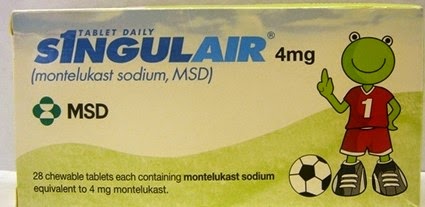
Merck Canada, which was incorporated in Canada, was the registered proprietor of apatent and SPC for montelukast sodium, an active ingredient in a product called 'Singulair'. The second claimant, Merck Sharp Dohme, was a UK company and its exclusive licensee. Merck filed for protection when montelukast sodium could not be patented in Poland.

Sigma, a parallel importer of pharma products into the United Kingdom. In June 2009 Pharma XL, an associated company of Sigma that was responsible for applying for parallel import authorisations for the Sigma group of companies, sent a letter to Merck Sharp Dohme which stated that it intended to import Singulair into the UK from Poland. This letter referred to the Specific Mechanism and asked whether there were any objections to importation. Merck Sharp Dohme did not respond. In September 2009 PXL applied to the Medicines and Health Regulatory Agency (MHRA) for parallel importation licences. This application required confirmation that either the Specific Mechanism did not apply or that one months’ prior notification had been given to the patent holder. Pharma XL indicated that one months’ notice had been given. In May 2010 the MHRA granted Pharma XL a licence in respect of the 5mg dose of Singulair. In June and July, Pharma XL wrote to Merck Sharp Dohme, saying it planned to import Singulair from Poland and enclosed copies of the intended representation of the repackaged products. Again Merck Sharp Dohme did not respond, so Sigma began to import 5mg Singulair. In September, Pharma XL was granted a second licence in respect of the 10mg dose. Pharma XL wrote two further notification letters to Merck Sharp Dohme in respect of the 10mg dosage, but again there was no response, so Sigma began to import the 10mg form of Singulair too.

In December, Merck Canada wrote to Pharma XL objecting to the importation of Singulair under the specific mechanism and asserting that its patent had been infringed. Sigma stopped its activity, but Merck Canada nonetheless sued for infringement of both the patent and the SPC.

Sigma's primary defence was that the Specific Mechanism merely conferred upon a patent holder the option of preventing imports: the derogating provisions were inapplicable unless and until the patent holder demonstrated his intention to exercise that option -- which did not happen till December 2010. In any event, having failed to respond to the letters from Pharma XL, Merck Canada was estopped from asserting its rights.

When the case came before the Patents County Court, Judge Birss QC (as he then was) rejected both these defences. In his view, the Specific Mechanism did not require the patent holder to demonstrate his intention to oppose importation before that activity was rendered an infringement -- and he declined to refer any issue concerning the proper interpretation of the Specific Mechanism to the CJEU. Also, he found on the facts that Merck Canada was not estopped from relying on its patent rights. He granted an injunction and ordered Sigma to deliver up its unsold stocks of Singular. Sigma appealed.

The Court of Appeal for England and Wales (Lord Justice Patten, Lady Justice Black and Lord Justice Kitchin) upheld the trial judge's decision relating to estoppel: this was because there was no suggestion that Merck Canada had been, or ought to have been, aware of Sigma's existing state of mind and, in particular, the misunderstanding which Sigma had already formed as to Merck Canada's attitude to the importation of patented pharmaceutical products from Poland. There was no pre-existing relationship, contractual or otherwise, that could have imposed a duty on Merck to respond to Pharma XL's letters and Merck Canada had not acted unconscionably in delaying its decision to bring proceedings within the legal time limit.

The Court of Appeal also agreed that Judge Birss QC was right to make the order for delivery up, on the basis that his finding of infringement had been correct. However, this action raised three groups of questions that concerned the proper interpretation of the specific mechanism. These had to be answered by the CJEU before the Court of Appeal could decide the appeal. As Lord Justice Kitchin, giving judgment for the Court, explained:
Under Article 267 of the TFEU this court may submit a request to the Court of Justice for a ruling on a question concerning the interpretation of a rule of EU law if it considers it necessary to do so in order to resolve a dispute before it. In my judgment this case raises three groups of questions concerning the proper interpretation of the Specific Mechanism which must be answered for this court to decide this appeal.

The first concerns the conditions which must be satisfied before a patent holder may bring infringement proceedings under the Specific Mechanism and, in particular, whether the derogation confers upon the patent holder an option of preventing imports falling in its scope; and whether the derogation is inapplicable unless and until the patent holder demonstrates his intention to exercise that option.

The second concerns the identity of the person who must give the notice under the second paragraph of the Specific Mechanism and, in particular, whether a notification is compliant if it is given by an applicant for regulatory approval in the Member State into which the products are to be imported; and whether it makes any difference if the notification is given and the application for regulatory approval is made by one legal entity within a group of companies which form a single economic unit, and the acts of importation are to be carried out by another legal entity within that group under licence from the first legal entity.

The third concerns the identity of the person to whom the notice must be given under the second paragraph of the Specific Mechanism and, in particular, whether, in a case where a group of companies form a single economic unit comprising a number of legal entities, it is sufficient if the notification is addressed to a legal entity which is the operating subsidiary and marketing authorisation holder in the Member State of importation rather than the entity within the group which has legal ownership of or an exclusive licence under the patent. A subsidiary question also arises as to whether a notification which is otherwise compliant is rendered non-compliant if it is addressed to the "the Manager, Regulatory Affairs".

I recognise that this court is not obliged to make a reference but I believe it is appropriate to do so for the following reasons. First, these questions are not acte clair. Second, the Specific Mechanism has not yet been considered by the Court of Justice and, although its Iberian predecessor was considered by the Court in Case C-191/90 Generics and Harris Pharmaceuticals, there is uncertainty as to how the decision of the Court in that case should be understood. Finally, the parties helpfully provided to us after the hearing an agreed table which shows that the Specific Mechanism will continue to be relevant until 2019. In all these circumstances I believe it to be desirable that the questions raised in this case are answered authoritatively as soon as possible.

I would therefore make a reference to the Court of Justice for a preliminary ruling on each of the three groups of questions posed at [97], [98] and [99] above. They are currently formulated in general terms on the basis of questions originally proposed by Sigma. We have not had the benefit of any comments from Merck. Accordingly, I would invite the parties to consider them further in the light of this judgment and to propose draft questions and a draft reference for our consideration.
The questions referred to the CJEU thus read as follows:
1 May the holder, or his beneficiary, of a patent or supplementary protection certificate rely upon his rights under the first paragraph of the Specific Mechanism only if he has first demonstrated his intention to do so? 2 If the answer to Question 1 is yes:
(a) How must that intention be demonstrated? 
(b) Is the holder, or his beneficiary, precluded from relying upon his rights with respect to any import or marketing of the pharmaceutical product in a Member State that occurred prior to the demonstration of his intention to rely upon those rights?
3 Who must give the prior notification to the holder or beneficiary of a patent or supplementary protection certificate under the second paragraph of the Specific Mechanism? In particular:
(a) Must the prior notification be given by the person intending to import or market the pharmaceutical product? or 
(b) Where. as permitted by the national regulatory system, an application for regulatory approval is made by someone other than the intended importer, can prior notification given by the applicant for regulatory approval be effective if that person does not itself intend to import or market the pharmaceutical product but where the intended importation and marketing will be carried out under the applicant's regulatory approval?; and
(i) Does it make any difference if the prior notification identifies the person that will import or market the pharmaceutical product? 
(ii) Does it make any difference if the prior notification is given and the application for regulatory approval is made by one legal person within a group of companies which form a single economic unit, and the acts of importation and marketing are to be carried out by another legal person within that group under licence from the first legal person, but where the prior notification does not identify the legal person that will import or market the pharmaceutical product?
4 To whom must prior notification be given under the second paragraph of the Specific Mechanism? In particular:
(a) Is the beneficiary of a patent or supplementary protection certificate limited to persons who have a legal right under national law to bring proceedings to enforce that patent or supplementary protection certification? or 
(b) In a case where a group of companies forms a single economic unit comprising a number of legal entities, is it sufficient if the notification is addressed to a legal entity which is the operating subsidiary and marketing authorisation holder in the Member State of importation rather than the entity within the group that has a legal right under national law to bring proceedings to enforce that patent or supplementary protection certificate, on the basis either that such legal entity may be characterised as a beneficiary of the patent or SPC, or that it is to be expected that such notification in the ordinary course of events will to come to the attention of the persons who make decisions on behalf of the patent or SPC holder?
If the answer to Question 4(b) is yes, 
(c) is a notification which is otherwise compliant rendered non-compliant if it is addressed to the "the Manager, Regulatory Affairs" of a company when that company is not the entity within the group that has a legal right under national law to bring proceedings to enforce that patent or supplementary protection certificate but is the operating subsidiary or marketing authorisation holder in the Member State of importation and when that Regulatory Affairs department in practice regularly receives notifications from parallel importers regarding the Specific Mechanism and other matters?
The CJEU has now answered these questions as follows:
1. The second paragraph of the Specific Mechanism  ... must be interpreted as not requiring the holder, or beneficiary, of a patent or supplementary protection certificate to give notification of his intention to oppose a proposed importation before invoking his rights under the first paragraph of that mechanism. However, if such a holder or beneficiary does not indicate such an intention during the one-month waiting period laid down in the second paragraph of the mechanism, the person proposing to import the pharmaceutical product in question may legitimately apply to the competent authorities for authorisation to import the product and, where appropriate, import and market it. The Specific Mechanism thus denies that holder or his beneficiary the possibility of relying on his rights under the first paragraph of the mechanism with regard to any importation and marketing of the pharmaceutical product carried out before such an intention was indicated.

2. The second paragraph of the Specific Mechanism must be interpreted as meaning that the notification must be given to the holder, or beneficiary, of the patent or the supplementary protection certificate, the latter term designating any person enjoying the rights conferred by law on the holder of the patent or the supplementary protection certificate.

3. The second paragraph of the Specific Mechanism is to be interpreted as not requiring the person intending to import or market the pharmaceutical product in question to give notification himself, provided that it is possible from the notification to identify that person clearly.

Tuesday, 4 November 2014

Specific Mechanism applies to paediatric extensions, says Danish Court

From Martin Dræbye Gantzhorn (Partner, Head of Life Science & Healthcare, Horten Advokatpartnerselskab, Copenhagen) comes this swift, short note to inform readers of The SPC Blog that in October the Danish Maritime and Commercial Court rendered a very rare decision on the scope of the "Specific Mechanism". The proceedings concerned the question whether a paediatric extension to a SPC will also prolong the patentee's protection under the "Specific Mechanism". In short:
The defendant (Orifarm) had imported a pharmaceutical product, MSD’s Singulair, from Poland during the term of the paediatric extension of the SPC. The plaintiff brought interlocutory injunction proceedings, claiming that such imports could be prohibited relying upon the "Specific Mechanism".

As its primary line of defence, the defendant held that the paediatric extension did not prolong the protection conferred by the "Specific Mechanism". As its second line of defence, the defendant held that, even if such protection could be conferred by a paediatric extension, such extension would only be applicable to those of the plaintiff's products which -- by their strength -- were indicated for children.

The Bailiff's Court (the court of first instance) held that the patent, the SPC and the paediatric extension thereof were to be considered as a single coherent right that covers all products and not just the ones authorized for the treatment of children. Accordingly, the Bailiff's Court found for the plaintiff.

The Maritime and Commercial Court agreed with the Bailiff's Court, stating that the expression "such protection" under the Specific Mechanism as stated in the Treaty of Accession is to be interpreted as the patent protection being one continuous string of protection. The Maritime and Commercial Court added that the paediatric extension is not dependent on a product being indicated for the treatment of children, but only on whether or not the drug is tested for children.

The protection would not therefore terminate until the paediatric extension had expired.
The judgement (in Danish) can be found here.

Thanks, Martin, for this really helpful summary.

Friday, 24 October 2014

Merck and the Specific Mechanism: the Advocate General offers some guidance

Just over a year ago, the Court of Appeal for England and Wales made a reference for a preliminary ruling to the Court of Justice of the European Union (CJEU) in Case C-539/13, Merck Canada Inc., Merck Sharp & Dohme Ltd v Sigma Pharmaceuticals PLC (as noted by The SPC Blog, here). The questions referred are somewhat wordy and relate to the Specific Mechanism -- a derogation from the principle of free movement of goods which was appended to the Act of Accession when a whole batch of new members -- the Czech Republic, Estonia, Cyprus, Latvia, Lithuania, Hungary, Malta, Poland, Slovenia and the Slovak Republic -- joined the European Union. 


This Special Mechanism allowed the owner of a pharma patent or an SPC to prevent the parallel importation of the patented product from one of the accession states if, at the time of filing, such protection was unavailable in that accession state; anyone who intended to import such a product was required to demonstrate to the relevant national authority that he had given notice of that intention to the holder or beneficiary of the protection.

The questions read as follows:

1 May the holder, or his beneficiary, of a patent or supplementary protection certificate rely upon his rights under the first paragraph of the Specific Mechanism only if he has first demonstrated his intention to do so? 
2 If the answer to Question 1 is yes:
(a) How must that intention be demonstrated?
(b) Is the holder, or his beneficiary, precluded from relying upon his rights with respect to any import or marketing of the pharmaceutical product in a Member State that occurred prior to the demonstration of his intention to rely upon those rights? 
3 Who must give the prior notification to the holder or beneficiary of a patent or supplementary protection certificate under the second paragraph of the Specific Mechanism? In particular:
(a) Must the prior notification be given by the person intending to import or market the pharmaceutical product?
or
(b) Where. as permitted by the national regulatory system, an application for regulatory approval is made by someone other than the intended importer, can prior notification given by the applicant for regulatory approval be effective if that person does not itself intend to import or market the pharmaceutical product but where the intended importation and marketing will be carried out under the applicant's regulatory approval?;  and
(i) Does it make any difference if the prior notification identifies the person that will import or market the pharmaceutical product?
(ii) Does it make any difference if the prior notification is given and the application for regulatory approval is made by one legal person within a group of companies which form a single economic unit, and the acts of importation and marketing are to be carried out by another legal person within that group under licence from the first legal person, but where the prior notification does not identify the legal person that will import or market the pharmaceutical product? 
4 To whom must prior notification be given under the second paragraph of the Specific Mechanism? In particular:
(a) Is the beneficiary of a patent or supplementary protection certificate limited to persons who have a legal right under national law to bring proceedings to enforce that patent or supplementary protection certification?
or
(b) In a case where a group of companies forms a single economic unit comprising a number of legal entities, is it sufficient if the notification is addressed to a legal entity which is the operating subsidiary and marketing authorisation holder in the Member State of importation rather than the entity within the group that has a legal right under national law to bring proceedings to enforce that patent or supplementary protection certificate, on the basis either that such legal entity may be characterised as a beneficiary of the patent or SPC, or that it is to be expected that such notification in the ordinary course of events will to come to the attention of the persons who make decisions on behalf of the patent or SPC holder?
If the answer to Question 4(b) is yes, 
(c) is a notification which is otherwise compliant rendered non-compliant if it is addressed to the "the Manager, Regulatory Affairs" of a company when that company is not the entity within the group that has a legal right under national law to bring proceedings to enforce that patent or supplementary protection certificate but is the operating subsidiary or marketing authorisation holder in the Member State of importation and when that Regulatory Affairs department in practice regularly receives notifications from parallel importers regarding the Specific Mechanism and other matters?
Yesterday the CJEU's Advocate General offered the following Opinion as to how these questions should be answered:


Questions 1 and 2
A holder of a patent or a supplementary protection certificate, or his beneficiary, duly notified of an intention to import and market pharmaceutical products covered by the Specific Mechanism ... is required to respond to the notification, so as to demonstrate an intention to oppose the proposed importation and placing on the market, within the period prescribed in the second paragraph of the Specific Mechanism, in order to be entitled to enforce any restriction on the import and marketing of the products concerned. A holder of a patent or a supplementary protection certificate, or his beneficiary, is precluded from relying upon his rights with respect to any import and marketing of the pharmaceutical product in a Member State that occurred prior to the demonstration of his intention to rely upon those rights.
Question 3
The notification required under the second paragraph of the aforementioned Specific Mechanism may be carried out by someone other than the potential importer and marketer provided that the identity of the latter is clearly identified by the notifying entity.
Question 4
Prior notification under the second paragraph of the aforementioned Specific Mechanism must be given to a person who has a legal right under national law to bring proceedings to enforce the patent or supplementary protection certificate.
It is now for the CJEU to decide whether to adopt this Opinion, on which it is expected to give a ruling in the next few months.

Friday, 22 November 2013

The "Special Mechanism": some 'Merck-y' questions for the CJEU

In April The SPC Blog reported on Merck Canada Inc and another v Sigma Pharmaceuticals plc [2013] EWCA Civ 326, a Court of Appeal for England and Wales reference to the Court of Justice of the European Union (CJEU) for preliminary rulings on a number of questions -- not precisely articulated at that time -- on SPCs and the "special mechanism". Case C-539/13 Merck Canada and Merck Sharpe and Dohme.

The UK Intellectual Property Office (IPO) is now seeking your opinion as to how these questions should be answered. Writes the IPO:
"We have received notification of a new case referred to the Court of Justice: C-539/13. This is a request for a preliminary ruling in a case concerning the importation into the UK from Poland of a drug by the defendant. The claimant states that the importation of the drug in question was an infringement of the Claimant companies' rights covered by a Supplementary Protection Certificate.

The filing date of the application for the Patent was prior to the date when Poland introduced patent protection for pharmaceutical products under its laws, and the application date for the SPC was before the date when SPCs could be applied for under the laws of Poland.

The questions referred relate to the Specific Mechanism in Chapter 2 of Annex IV to the Act concerning the conditions of accession of (inter alia) the Republic of Poland".
The questions are somewhat cumbersome on account of their interrelationship:
Conditions for reliance upon the Specific Mechanism

1. May the holder, or his beneficiary, of a patent or supplementary protection certificate rely upon his rights under the first paragraph of the Specific Mechanism only if he has first demonstrated his intention to do so?

2. If the answer to Question 1 is yes:
(a) How must that intention be demonstrated?

(b) Is the holder, or his beneficiary, precluded from relying upon his rights with respect to any import or marketing of the pharmaceutical product in a Member State that occurred prior to the demonstration of his intention to rely upon those rights?
The notifier

3. Who must give the prior notification to the holder or beneficiary of a patent or supplementary protection certificate under the second paragraph of the Specific Mechanism? In particular:
(a) Must the prior notification be given by the person intending to import or market the pharmaceutical product?

or

(b) Where, as permitted by the national regulatory system, an application for regulatory approval is made by someone other than the intended importer, can prior notification given by the applicant for regulatory approval be effective if that person does not itself intend to import or market the pharmaceutical product but where the intended importation and marketing will be carried out under the applicant's regulatory approval?; and
(i) Does it make any difference if the prior notification identifies the person that will import or market the pharmaceutical product?

(ii) Does it make any difference if the prior notification is given and the application for regulatory approval is made by one legal person within a group of companies which form a single economic unit, and the acts of importation and marketing are to be carried out by another legal person within that group under licence from the first legal person, but where the prior notification does not identify the legal person that will import or market the pharmaceutical product?
Who should be notified? 
4. To whom must prior notification be given under the second paragraph of the Specific Mechanism? In particular:
(a) Is the beneficiary of a patent or supplementary protection certificate limited to persons who have a legal right under national law to bring proceedings to enforce that patent or supplementary protection certification?

or

(b) In a case where a group of companies forms a single economic unit comprising a number of legal entities, is it sufficient if the notification is addressed to a legal entity which is the operating subsidiary and marketing authorisation holder in the Member State of importation rather than the entity within the group that has a legal right under national law to bring proceedings to enforce that patent or supplementary protection certificate, on the basis either that such legal entity may be characterised as a beneficiary of the patent or SPC. or that it is to be expected that such notification in the ordinary course of events will to come to the attention of the persons who make decisions on behalf of the patent or SPC holder?

(c) If the answer to Question 4(b) is yes, is a notification which is otherwise compliant rendered non-compliant if it is addressed to the "the Manager, Regulatory Affairs" of a company when that company is not the entity within the group that has a legal right under national law to bring proceedings to enforce that patent or supplementary protection certificate but is the operating subsidiary or marketing authorisation holder in the Member State of importation and when that Regulatory Affairs department in practice regularly receives notifications from parallel importers regarding the Specific Mechanism and other matters?
Adds the IPO (if you're still reading after all this!):
"If you would like to comment on this case please email policy@ipo.gov.uk by 27 November 2013. 
We understand how difficult it is to provide detailed comments in the time available. The IPO has tight time limits in which to consider and provide advice to ministers on ECJ cases. In order to help us provide the right advice, we just need a short email by the deadline stating whether you think the UK should intervene and some general points about how you think we should answer the questions.  
You are welcome to follow this email up with more detailed comments after the deadline, which can be taken into consideration if we have chosen to submit observations or if we decide to attend a hearing".

Tuesday, 23 April 2013

Singulair and the Specific Mechanism for accession states: some questions for the CJEU

Merck Canada Inc and another v Sigma Pharmaceuticals plc [2013] EWCA Civ 326 is yet another SPC-flavoured case to go to the Court of Justice of the European Union (CJEU) -- but it's quite different from the rest.  It involves the "Specific Mechanism".

In short, in 2004 a number of new Member States (the 'accession states') joined the European Union. Some of those states had not historically permitted the patenting of pharmaceutical products. By 2004, such patents were permitted, but there remained a number of cases where patents or supplementary protection certificates had been granted in other Member States for pharmaceutical products at a time when no such protection had been available in one or more of the accession states. Accordingly, a special derogation from the normal free movement rules was negotiated as part of the accession arrangements.

This derogation, known as the 'Specific Mechanism', was appended to the Act of Accession. It permitted the owner of a pharma patent or SPC to prevent the parallel importation of the patented product from one of the accession states if, at the time of filing, such protection was unavailable in that accession state. It also anyone who intended to import such a product to demonstrate to the relevant national authority that he had given notice of that intention to the holder or beneficiary of the protection.

Merck Canada, which was incorporated in Canada, was the registered proprietor of apatent and SPC for montelukast sodium, an active ingredient in a product called 'Singulair'. The second claimant, Merck Sharp Dohme, was a UK company and its exclusive licensee. Merck filed for protection when montelukast sodium could not be patented in Poland.

Sigma, a parallel importer of pharma products into the United Kingdom. In June 2009 Pharma XL, an associated company of Sigma that was responsible for applying for parallel import authorisations for the Sigma group of companies, sent a letter to Merck Sharp Dohme which stated that it intended to import Singulair into the UK from Poland. This letter referred to the Specific Mechanism and asked whether there were any objections to importation. Merck Sharp Dohme did not respond. In September 2009 PXL applied to the Medicines and Health Regulatory Agency (MHRA) for parallel importation licences. This application required confirmation that either the Specific Mechanism did not apply or that one months’ prior notification had been given to the patent holder. Pharma XL indicated that one months’ notice had been given. In May 2010 the MHRA granted Pharma XL a licence in respect of the 5mg dose of Singulair. In June and July, Pharma XL wrote to Merck Sharp Dohme, saying it planned to import Singulair from Poland and enclosed copies of the intended representation of the repackaged products. Again Merck Sharp Dohme did not respond, so Sigma began to import 5mg Singulair. In September, Pharma XL was granted a second licence in respect of the 10mg dose. Pharma XL wrote two further notification letters to Merck Sharp Dohme in respect of the 10mg dosage, but again there was no response, so Sigma began to import the 10mg form of Singulair too.

In December, Merck Canada wrote to Pharma XL objecting to the importation of Singulair under the specific mechanism and asserting that its patent had been infringed. Sigma stopped its activity, but Merck Canada nonetheless sued for infringement of both the patent and the SPC.

Sigma's primary defence was that the Specific Mechanism merely conferred upon a patent holder the option of preventing imports: the derogating provisions were inapplicable unless and until the patent holder demonstrated his intention to exercise that option -- which did not happen till December 2010. In any event, having failed to respond to the letters from Pharma XL, Merck Canada was estopped from asserting its rights.

When the case came before the Patents County Court, Judge Birss QC rejected both these defences. In his view, the Specific Mechanism did not require the patent holder to demonstrate his intention to oppose importation before that activity was rendered an infringement -- and he declined to refer any issue concerning the proper interpretation of the Specific Mechanism to the CJEU. Also, he found on the facts that Merck Canada was not estopped from relying on its patent rights. He granted an injunction and ordered Sigma to deliver up its unsold stocks of Singular. Sigma appealed.

The Court of Appeal for England and Wales (Lord Justice Patten, Lady Justice Black and Lord Justice Kitchin) upheld the trial judge's decision relating to estoppel: this was because there was no suggestion that Merck Canada had been, or ought to have been, aware of Sigma's existing state of mind and, in particular, the misunderstanding which Sigma had already formed as to Merck Canada's attitude to the importation of patented pharmaceutical products from Poland. There was no pre-existing relationship, contractual or otherwise, that could have imposed a duty on Merck to respond to Pharma XL's letters and Merck Canada had not acted unconscionably in delaying its decision to bring proceedings within the legal time limit.

The Court of Appeal also agreed that Judge Birss QC was right to make the order for delivery up, on the basis that his finding of infringement had been correct.

However, this action raised three groups of questions that concerned the proper interpretation of the specific mechanism.  These had to be answered by the CJEU before the Court of Appeal could decide the appeal.  As Lord Justice Kitchin, giving judgment for the Court, explained:

  1. Under Article 267 of the TFEU this court may submit a request to the Court of Justice for a ruling on a question concerning the interpretation of a rule of EU law if it considers it necessary to do so in order to resolve a dispute before it. In my judgment this case raises three groups of questions concerning the proper interpretation of the Specific Mechanism which must be answered for this court to decide this appeal.

  2. The first concerns the conditions which must be satisfied before a patent holder may bring infringement proceedings under the Specific Mechanism and, in particular, whether the derogation confers upon the patent holder an option of preventing imports falling in its scope; and whether the derogation is inapplicable unless and until the patent holder demonstrates his intention to exercise that option.

  3. The second concerns the identity of the person who must give the notice under the second paragraph of the Specific Mechanism and, in particular, whether a notification is compliant if it is given by an applicant for regulatory approval in the Member State into which the products are to be imported; and whether it makes any difference if the notification is given and the application for regulatory approval is made by one legal entity within a group of companies which form a single economic unit, and the acts of importation are to be carried out by another legal entity within that group under licence from the first legal entity.

  4. The third concerns the identity of the person to whom the notice must be given under the second paragraph of the Specific Mechanism and, in particular, whether, in a case where a group of companies form a single economic unit comprising a number of legal entities, it is sufficient if the notification is addressed to a legal entity which is the operating subsidiary and marketing authorisation holder in the Member State of importation rather than the entity within the group which has legal ownership of or an exclusive licence under the patent. A subsidiary question also arises as to whether a notification which is otherwise compliant is rendered non-compliant if it is addressed to the "the Manager, Regulatory Affairs".

  5. I recognise that this court is not obliged to make a reference but I believe it is appropriate to do so for the following reasons. First, these questions are not acte clair. Second, the Specific Mechanism has not yet been considered by the Court of Justice and, although its Iberian predecessor was considered by the Court in Case C-191/90 Generics and Harris Pharmaceuticals, there is uncertainty as to how the decision of the Court in that case should be understood. Finally, the parties helpfully provided to us after the hearing an agreed table which shows that the Specific Mechanism will continue to be relevant until 2019. In all these circumstances I believe it to be desirable that the questions raised in this case are answered authoritatively as soon as possible.

  6. I would therefore make a reference to the Court of Justice for a preliminary ruling on each of the three groups of questions posed at [97], [98] and [99] above. They are currently formulated in general terms on the basis of questions originally proposed by Sigma. We have not had the benefit of any comments from Merck. Accordingly, I would invite the parties to consider them further in the light of this judgment and to propose draft questions and a draft reference for our consideration.

The SPC Blog awaits the questions with keen interest.