
If you'd like to comment on this reference, please send your observations to Policy by 6 May by email.

 |
The Cour d'appel de Paris |
Du Pont - Merck v Mylan: the Paris Court of Appeals confirms that combination products infringe mono-SPCs and sets a precedent on the requirements for obtaining a paediatric extension
Mylan and Qualimed had lodged an appeal against the preliminary injunction rendered on 12 February 2010, enjoining them, on the basis of Du Pont's SPC granted for Losartan as extended by a paediatric extension, from marketing a generic drug comprising Losartan and HCTZ. The appeal essentially rested on two grounds:
(i) the appellants alleged that the owner of an SPC must file, along with his initial application for a paediatric extension, all "paediatric" (varied) marketing authorisations for each of the 27 Member States of the European Union, without a possibility to supplement the file at a later stage and
(ii) the appellants argued that a combination product does not infringe the SPC granted for one of the active ingredients of the combination.
The Court of Appeals dismissed both arguments, and confirmed the first instance injunction.
1. As far as the validity of the SPC is concerned, the Court first noted (in line with an earlier decision of the Dutch Patent Office of 2 June 2009) that it would place an undue burden on owners of SPCs to require them to provide all 27 "paediatric" marketing authorisations along with the application for paediatric extension:
"This provision [Article 36 of the SPC Regulation], which only mentions the fact that the product must be authorised, does not specify that, at the date of the filing of the application, all the paediatric MAs must have been granted. Indeed, requiring the filing of the 27 paediatric MAs on the day of the filing of the application is in practice not possible in the absence of a centralised registration procedure and due to the variable speediness of the different agencies in charge of granting these authorisations."
The Court went on to decide, in conformity with the practice of the French patent office, that the applicant for a paediatric extension must only prove that the product has been authorised in all 27 Member States, i.e. provide the initial ("non-paediatric") marketing authorisations:
"The provision can only refer to the requirement to provide the initial MAs, while the paediatric MAs can be provided during the course of the granting procedure of the extension. It should be mentioned in this respect that this position has eventually been adopted by the INPI, as confirmed by the circular letter of the pharmaceutical industry trade union dated 7 January 2011.
Du Pont filed its application for an extension on 27 February 2009 and the copies of the MAs for all other Member States were enclosed. Consequently, the procedure is lawful and the extension granted further to this application is not to be nullified."
2. The Court further confirmed, as also recently ruled by the President of the Paris First Instance Court in Novartis v Actavis (Valsartan), that an SPC covering a compound (Losartan in the present case) obviously prohibits the marketing of pharmaceutical products containing Losartan alone or in combination with another active ingredient.
In this respect, the Court first referred to the basic principles of patent law:
"It should be remembered that, under French law, infringement is assessed according to resemblances and not differences only, such that the inclusion of additional features to those claimed in a patent does not put an end to the infringement."
It also analysed the purpose of SPCs:
"An SPC, which aims at supporting innovation in the field of health, grants a protection to a product as a medicament under all the forms that fall within the protection of the basic patent."
The Court concluded from this that:
"Consequently, in the case at hand, the certificate which has been extended grants the same rights as those of the basic patent covering losartan, and the protection granted by this certificate concerns the product covered by the MA for any use of this product as a medicament that has been authorised prior to the expiry of the certificate. Consequently, the protection encompasses any use of losartan as a medicament."
The Court also specifically addressed the appellants' argument based on the fact that the claimants had also been the owners of a (then-expired) SPC specifically covering the combination product (Losartan and HCTZ°). In this regard, the Court followed a classical intellectual property reasoning, and held that
"The existence of another SPC whose protection is expired is irrelevant in the case at hand."
A further appeal to the Supreme Court is still possible".The authentic French version of the decision can be read here. The English translation can be read here.
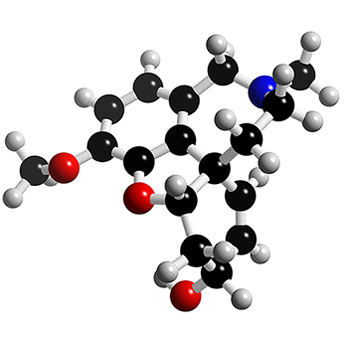 |
| Galantamine -- it has been around a long time |
"(1) For the purposes of Article 13(1) ..., is the “first authorisation to place the product on the market in the Community” the first authorisation to place the product on the market in the Community which was issued in accordance with Council Directive 65/65 ... (now replaced with Directive 2001/83...) or will any authorisation that enables the product to be placed on the market in the Community or EEA suffice?AG Mengozzi has advised as follows:
(2) If, for the purposes of Article 13(1) ... an “authorisation to place the product on the market in the Community” must have been issued in accordance with Directive 65/65 ... (now replaced with Directive 2001/83 ...), is an authorisation that was granted in 1963 in Austria in accordance with the national legislation in force at that time (which did not comply with the requirements of Directive 65/65...) and that was never amended to comply with [it] and was ultimately withdrawn in 2001 to be treated as an authorisation granted in accordance with Directive 65/65 ... for that purpose?".
"(1) A marketing authorisation for a medicinal product granted by the competent authorities of a Member State pursuant to the transitional arrangements introduced by Article 24 of Council Directive 65/65 ... in conjunction with Article 39 of Council Directive 75/319 ... as amended by Article 37 of that directive – on the basis of a marketing authorisation granted prior to the transposition of Directive 65/65 into the legal order of that Member State, may constitute the first marketing authorisation for the purposes of Article 13 of Council Regulation ... 1768/92 ....As with today's earlier post, this is for informational purposes only. Further comment will follow.
For the purposes of the application of Article 13 ..., an authorisation granted for use of a product, as a medicinal product, other than that or those protected by the patent which is the basic patent within the meaning of Article 1(c) of the regulation, may also constitute the first authorisation to place the product on the market in the Community.
(2) A marketing authorisation for a medicinal product granted by the competent Austrian authorities in accordance with the national legislation, and maintained in force following the accession of Austria to the European Economic Area, initially, and to the Community, subsequently, must be treated as an authorisation granted in accordance with Directive 65/65 for the purposes of applying Article 13 ...".

"(1) For the purposes of Articles 13 and 19 of Council Regulation (EC) No 1768/92, is an authorisation a ‘first authorisation to place ... on the market in the Community’, if it is granted in pursuance of a national law which is compliant with Council Directive 65/65/EEC, or is it necessary that it be established in addition that, in granting the authorisation in question, the national authority followed an assessment of data as required by the administrative procedure laid down in that directive?This morning Advocate General Mengozzi gave the following somewhat bifurcated advice to the Court:
(2) For the purposes of Articles 13 and 19 of Council Regulation (EC) No 1768/92, does the expression ‘first authorisation to place ... on the market in the Community’ include authorisations which had been permitted by national law to co-exist with an authorisation regime which complies with Council Directive 65/65/EEC?
(3) Is a product which is authorised to be placed on the market for the first time in the EEC without going through the administrative procedure laid down in Council Directive 65/65/EEC within the scope of Council Regulation (EC) 1768/92 as defined by Article 2?
(4) If not, is an SPC granted in respect of such a product invalid?".
"95. Council Regulation ... 1768/92 ... must be interpreted, pursuant to Article 2 thereof, as meaning that products placed on the market as medicinal products in Community territory before obtaining a marketing authorisation in accordance with Council Directive 65/65 ...or with Council Directive 81/851 ... do not fall within the scope of the regulation.This post is simply to alert readers to the availability of the Opinion. Further comment will follow.
Supplementary protection certificates granted for such products must be deemed to be invalid.’
96. Should the Court not adopt that solution, I propose that it should give the following answers to the first and second questions ...
‘A marketing authorisation granted by the authorities of a Member State in accordance with the national provisions transposing Directive 65/65 may constitute the first marketing authorisation in the Community for the purpose of Articles 13 and 19 of Regulation No 1768/92, even when the administrative procedure for which the directive provides has not been implemented or has not been properly implemented, particularly as regards the carrying out of the toxicological and pharmacological tests and the clinical trials required by the directive.
A marketing authorisation granted by the competent authorities of a Member State, under the transitional arrangements provided for by Article 24 of Directive 65/65, in conjunction with Article 39 of Second Council Directive 75/319 ...as amended ..., may also constitute the first marketing authorisation of the product in the Community, on the basis of a marketing authorisation granted before the transposition of Directive 65/65 into the legal order of that Member State.
For the purposes of the application of Articles 13 and 19 of Regulation No 1768/92, a marketing authorisation granted for a use of the product as a medicinal product different from the use or uses protected by the patent constituting the basic patent under Article 1(c) of that regulation may also be regarded as the first marketing authorisation in the Community".

Questions referred
1. For the purposes of Articles 13 and 19 of Council Regulation (EC) No 1768/921, is an authorisation a "first authorization to place ... on the market in the Community", if it is granted in pursuance of a national law which is compliant with Council Directive 65/65/EEC2, or is it necessary that it be established in addition that, in granting the authorisation in question, the national authority followed an assessment of data as required by the administrative procedure laid down in that Directive?
2. For the purposes of Articles 13 and 19 of Council Regulation (EC) No 1768/92, does the expression "first authorization to place ... on the market in the Community", include authorisations which had been permitted by national law to co-exist with an authorisation regime which complies with Council Directive 65/65/EEC?
3. Is a product which is authorised to be placed on the market for the first time in the EEC without going through the administrative procedure laid down in Council Directive 65/65/EEC within the scope of Council Regulation (EC) 1768/92 as defined by Article 2?
4. If not, is an SPC granted in respect of such a product invalid?
____________
1 - Council Regulation (EEC) No 1768/92 of 18 June 1992 concerning the creation of a supplementary protection certificate for medicinal products OJ L 182, p. 12 - Council Directive 65/65/EEC of 26 January 1965 on the approximation of provisions laid down by Law, Regulation or Administrative Action relating to proprietary medicinal products OJ 22, p. 369 English special edition: Series I Chapter 1965-1966 p. 24
Questions referred
For the purposes of Article 13(1) of Council Regulation (EEC) No 1768/921, is the "first authorisation to place the product on the market in the Community" the first authorisation to place the product on the market in the Community which was issued in accordance with Council Directive 65/65/EEC2 (now replaced with Directive 2001/83/EC3) or will any authorisation that enables the product to be placed on the market in the Community or EEA suffice?
If, for the purposes of Article 13(1) of Council Regulation (EEC) No 1768/92, an "authorisation to place the product on the market in the Community" must have been issued in accordance with Directive 65/65/EEC (now replaced with Directive 2001/83/EC), is an authorisation that was granted in 1963 in Austria in accordance with the national legislation in force at that time (which did not comply with the requirements of Directive 65/65/EEC) and that was never amended to comply with Directive 65/65/EEC and was ultimately withdrawn in 2001 to be treated as an authorisation granted in accordance with Directive 65/65/EEC for that purpose?____________
"We fully agree with Frank-Erich's and Cordula's report on the proceedings, but we thought it would be worth mentioning two additional matters which may or may not be interesting for your readers.Henrik and Thomas have also sent the blog this order of 17 March 2011, in which the Düsseldorf District Court ordered Novartis to file an action on the merits against Actavis Germany. In the parallel preliminary injunction proceedings against Actavis Malta there is an equivalent decision.
1. In the joint oral hearing for both proceedings, the court acknowledged that difficult questions of interpretation of the SPC Regulation were at stake. The issue was to be finally decided by the ECJ. In this context, it is particularly noteworthy that the court has made any enforcement of the preliminary injunctions dependent on Novartis providing securities (of EUR 12 million against Actavis Germany and EUR 3.6 million against Actavis Malta).
2. The court has ordered Novartis to file actions on the merits against Actavis Germany and Actavis Malta by 8 April 2011. In actions on the merits, a referral to the ECJ will be possible, other than in preliminary injunction proceedings".

"On 8 March 2011, in preliminary proceedings initiated by Novartis AG against Actavis Deutschland GmbH and Actavis Ltd, Malta, the Düsseldorf District Court held that Actavis' products containing the active ingredients valsartan and hydrochlorothiazide (HCTZ) would infringe Novartis' German SPC relating to valsartan (DE 196 75 036). However, in view of the pre-trial correspondence between the parties, there was no imminent threat as to an infringement of the underlying basic patent EP 0 443 983 B1. These decisions may be appealed.
The key legal question before the court was whether a combination product containing two active ingredients (in this case valsartan and HCTZ) would fall under the scope of a SPC for just one of those active ingredients, valsartan. The Court explained:
"In view of the not very precisely phrased and thus not easy to understand wording of article 4 of the SPC Regulation, the legislative purpose of the limitation of the protection only to "the product covered by the marketing authorisation" is of key importance for the interpretation of this article."
The Court then refers to Recitals 3, 6 and 7, 8 and 9 of the SPC Regulation and summarized them thus:
"The cited Recitals show that the Regulation aims at a de facto extension of the patent protection in order to achieve a compensation of the loss of effective patent protection ...
In view of this ratio of the SPC Regulation, the content of Articles 4 and 5 SPC Regulation and its relationship between each other must be understood as follows: Article 5 SPC Regulation concerns -- as is confirmed by its official title -- the effects of a certificate and stipulates that they are identical to the effects of the underlying basic patent. On the other hand the purpose of Article 4 SPC Regulation is to determine the object of these effects - i.e. the subject-matter. In this context, Article 4 uses three criteria:
- First - and actually merely declaratory - it is clarified that the absolute limit is set by the scope of protection of the basic patent.
- Then the product is identified in order to delimit it from other compounds which potentially are also encompassed by the basic patent. Here, Article 4 SPC Regulation does not - contrary to the view of the Defendant - aim for a limitation to the specific authorised medicinal product, as results from various passages of the SPC-Regulation which speak about the product identified by the marketing authorisation: Articles 8(1)(b) and (c), 9(3)(d), Article 11(1)(d), SPC Regulation.
- Finally, Article 4 SPC Regulation stipulates a purpose-bound compound protection by limiting the subject-matter to the authorised uses (see Kraßer, § 26 A II, p. 586). This third criterion confirms that with regards to the understanding presented here Article 4 SPC Regulation is not redundant and cannot simply be replaced by a mere term extension for the basic patent.
The limitation of the subject-matter of a certificate in Article 4 SPC Regulation as a whole has to be understood in a sense that it has the sole purpose to exclude an "over-extensive" protection: In case the basic patent protects further products or active ingredients which are not subject-matter of the certificate, it stipulates an exception from the principle of Article 5 SPC Regulation that the protection of basic patent and certificate are identical. When determining the subject-matter of the certificate the patent claims which possibly also protect further compounds fictitiously have to be regarded as if they only contained the active ingredient indicated in the certificate; Article 4 SPC Regulation thus leads to a hypothetical patent claim which is product and purpose related (see Benkard/Grabinski, PatG, 10th edition, § 16a, note 38). The compensation is not limited to an authorisation procedure for a specific medicinal product, but for the term since the filing of the basic patent during which a product according to the invention cannot be marketed (considering also a maximum term of 5 years since the certificate entered into effect, Article 13 SPC Regulation)."
The Court also rejected Actavis' position that the purpose of an SPC was a reward for obtaining a marketing authorisation, pointing out that this approach would mean that "the compensation for loss of effective patent protection could be circumvented all too easily which would contradict the purpose of the SPC Regulation (see ECJ, GRUR Int. 2000, 69, 70 et seq. - Farmitalia)".A copy of the German original of the decision against Actavis Deutschland GmbH can be accessed here. Frank-Erich and Cordula inform the blog that, possibly early this week, they might be able to provide us with a full English translation of the judgment.


