A niche blog dedicated to the issues that arise when supplementary protection certificates (SPCs) extend patents beyond their normal life -- and to the respective positions of patent owners, investors, competitors and consumers. The blog also addresses wider issues that may be of interest or use to those involved in the extension of patent rights. You can email The SPC Blog here

Thursday, 31 March 2011

AG advises recognition of ancient authorisations

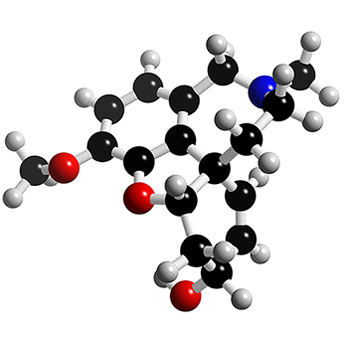
Galantamine -- it has been
around a long time
The second of today's two Advocate General's Opinions on SPC references, also authored by AG Mengozzi, arises from Case C‑427/09 Generics (UK) Ltd v Synaptech Inc, another British reference but this time from the Court of Appeal for England and Wales. 

In short, Galantamine received marketing authorisation in Austria in 1963 as a treatment for polio, under the trade mark ‘Nivalin’. This authorisation, granted under the Austrian 1947 medicines regulations then in force, was withdrawn in 2001. In the 1960s, Nivalin was also marketed in Germany under the legislation then in force. After the Law restructuring the legislation on medicinal products --the AMG 1976 -- came into force, Nivalin remained on the market in Germany under its provisions, but that authorisation was withdrawn between July 2000 and January 2001. In 1987 Synaptech applied for a galantamine patent at the European Patent Office, claiming the use of galantamine for the treatment of Alzheimer’s disease. The patent expired on 16 January 2007 (‘the basic patent’). In 1999 Janssen-Cilag appliedfor a marketing authorisation in Sweden for galantamine as a treatment for Alzheimer’s disease under the brand name Reminyl. This authorisation was granted on 1 March 2000. A marketing authorisation for Reminyl was granted in the UK in September 2000 based on the earlier Swedish authorisation.

In December 2000 Synaptech applied to the UK IPO for an SPC for the basic patent, listing the Swedish marketing authorisation as the first marketing authorisation for galantamine in the Community. The SPC for galantamine was granted with a term of five years, expiring on 15 January 2012. Taking the view that the SPC’s date of expiry had not been calculated correctly under Regulation 1768/92, Generics brought an action for rectification of the register of patents, which was dismissed. Following Generics' appeal, the Court of Appeal referred two questions to the ECJ:
"(1) For the purposes of Article 13(1) ..., is the “first authorisation to place the product on the market in the Community” the first authorisation to place the product on the market in the Community which was issued in accordance with Council Directive 65/65 ... (now replaced with Directive 2001/83...) or will any authorisation that enables the product to be placed on the market in the Community or EEA suffice?

(2) If, for the purposes of Article 13(1) ... an “authorisation to place the product on the market in the Community” must have been issued in accordance with Directive 65/65 ... (now replaced with Directive 2001/83 ...), is an authorisation that was granted in 1963 in Austria in accordance with the national legislation in force at that time (which did not comply with the requirements of Directive 65/65...) and that was never amended to comply with [it] and was ultimately withdrawn in 2001 to be treated as an authorisation granted in accordance with Directive 65/65 ... for that purpose?".
AG Mengozzi has advised as follows:
"(1) A marketing authorisation for a medicinal product granted by the competent authorities of a Member State pursuant to the transitional arrangements introduced by Article 24 of Council Directive 65/65 ... in conjunction with Article 39 of Council Directive 75/319 ... as amended by Article 37 of that directive – on the basis of a marketing authorisation granted prior to the transposition of Directive 65/65 into the legal order of that Member State, may constitute the first marketing authorisation for the purposes of Article 13 of Council Regulation ... 1768/92 ....

For the purposes of the application of Article 13 ..., an authorisation granted for use of a product, as a medicinal product, other than that or those protected by the patent which is the basic patent within the meaning of Article 1(c) of the regulation, may also constitute the first authorisation to place the product on the market in the Community.

(2) A marketing authorisation for a medicinal product granted by the competent Austrian authorities in accordance with the national legislation, and maintained in force following the accession of Austria to the European Economic Area, initially, and to the Community, subsequently, must be treated as an authorisation granted in accordance with Directive 65/65 for the purposes of applying Article 13 ...".
As with today's earlier post, this is for informational purposes only. Further comment will follow.

Wednesday, 30 March 2011

AG offers alternative solutions in Synthon reference

Case C‑195/09 Synthon BV v Merz Pharma GmbH & Co KG is the first of two Court of Justice Opinions published today on the Curia website on issues arising from Regulation 1768/92.  This reference for a preliminary ruling from the Patents Court, England and Wales, arose from an action in which Synthon claimed that a 2002 marketing authorisation for memantine was not its first marketing authorisation as a medicinal product since it had already been authorised, in 1983, in Luxembourg, as an ingredient of Akatinol, and that Merz’s SPC was therefore (i) invalid for failure to meet the requirements of Article 3 of the regulation or (ii) invalid or zero-term under Article 13 in that the first marketing authorisation in the Community predated the filing of the patent application (the SPC was invalid, said Synthon, because the first marketing authorisation in the Community was obtained before 1 January 1985 either in breach of Article 19(1) or because memantine was marketed as a medicinal product before authorisation was obtained in accordance with Directive 65/65, in breach of Articles 2 and 3). The court sought guidance on the following questions:
"(1) For the purposes of Articles 13 and 19 of Council Regulation (EC) No 1768/92, is an authorisation a ‘first authorisation to place ... on the market in the Community’, if it is granted in pursuance of a national law which is compliant with Council Directive 65/65/EEC, or is it necessary that it be established in addition that, in granting the authorisation in question, the national authority followed an assessment of data as required by the administrative procedure laid down in that directive?

(2) For the purposes of Articles 13 and 19 of Council Regulation (EC) No 1768/92, does the expression ‘first authorisation to place ... on the market in the Community’ include authorisations which had been permitted by national law to co-exist with an authorisation regime which complies with Council Directive 65/65/EEC?

(3) Is a product which is authorised to be placed on the market for the first time in the EEC without going through the administrative procedure laid down in Council Directive 65/65/EEC within the scope of Council Regulation (EC) 1768/92 as defined by Article 2?

(4) If not, is an SPC granted in respect of such a product invalid?".
This morning Advocate General Mengozzi gave the following somewhat bifurcated advice to the Court:
"95. Council Regulation ... 1768/92 ... must be interpreted, pursuant to Article 2 thereof, as meaning that products placed on the market as medicinal products in Community territory before obtaining a marketing authorisation in accordance with Council Directive 65/65 ...or with Council Directive 81/851 ... do not fall within the scope of the regulation.

Supplementary protection certificates granted for such products must be deemed to be invalid.’

96. Should the Court not adopt that solution, I propose that it should give the following answers to the first and second questions ...

‘A marketing authorisation granted by the authorities of a Member State in accordance with the national provisions transposing Directive 65/65 may constitute the first marketing authorisation in the Community for the purpose of Articles 13 and 19 of Regulation No 1768/92, even when the administrative procedure for which the directive provides has not been implemented or has not been properly implemented, particularly as regards the carrying out of the toxicological and pharmacological tests and the clinical trials required by the directive.

A marketing authorisation granted by the competent authorities of a Member State, under the transitional arrangements provided for by Article 24 of Directive 65/65, in conjunction with Article 39 of Second Council Directive 75/319 ...as amended ..., may also constitute the first marketing authorisation of the product in the Community, on the basis of a marketing authorisation granted before the transposition of Directive 65/65 into the legal order of that Member State.

For the purposes of the application of Articles 13 and 19 of Regulation No 1768/92, a marketing authorisation granted for a use of the product as a medicinal product different from the use or uses protected by the patent constituting the basic patent under Article 1(c) of that regulation may also be regarded as the first marketing authorisation in the Community".
This post is simply to alert readers to the availability of the Opinion. Further comment will follow.

Monday, 28 March 2011

Facts and figures

Alice de Pastors has produced a series of informative newsletters on SPCs, of which the latest -- SPC News 25 (March 2011): LATEST NEWS ON MEDICINAL PRODUCT SPCs IN EUROPE -- has just been released. There's lots of data on SPC grants, with some handsome diagrams too.

Data listed in this issue are found under the following headings:

  • Medicinal Product SPCs filed from 1991 to 2010
  • Medicinal Product SPCs filed in 2010
  • SPCs in Europe relating to valsartan
  • Recent national or European decisions affecting SPCs for valsartan or valsartan combinations
  • Paediatric SPC extensions

If you want a copy, just email Alice here.

Sunday, 27 March 2011

In the ECJ this week

This Thursday the Court of Justice of the European Union's agenda promises us two Advocate Generals' Opinions. We hope to bring news of these Opinions as they come out.

This first is in Case C-195/09 Synthon v Merz Pharma:
Questions referred
1. For the purposes of Articles 13 and 19 of Council Regulation (EC) No 1768/921, is an authorisation a "first authorization to place ... on the market in the Community", if it is granted in pursuance of a national law which is compliant with Council Directive 65/65/EEC2, or is it necessary that it be established in addition that, in granting the authorisation in question, the national authority followed an assessment of data as required by the administrative procedure laid down in that Directive? 
2. For the purposes of Articles 13 and 19 of Council Regulation (EC) No 1768/92, does the expression "first authorization to place ... on the market in the Community", include authorisations which had been permitted by national law to co-exist with an authorisation regime which complies with Council Directive 65/65/EEC? 
3. Is a product which is authorised to be placed on the market for the first time in the EEC without going through the administrative procedure laid down in Council Directive 65/65/EEC within the scope of Council Regulation (EC) 1768/92 as defined by Article 2?
4. If not, is an SPC granted in respect of such a product invalid? 
____________ 
1 - Council Regulation (EEC) No 1768/92 of 18 June 1992 concerning the creation of a supplementary protection certificate for medicinal products OJ L 182, p. 12 - Council Directive 65/65/EEC of 26 January 1965 on the approximation of provisions laid down by Law, Regulation or Administrative Action relating to proprietary medicinal products OJ 22, p. 369 English special edition: Series I Chapter 1965-1966 p. 24

The second is Case C-427/09 Generics (UK) v Synaptech Inc:
Questions referred 
For the purposes of Article 13(1) of Council Regulation (EEC) No 1768/921, is the "first authorisation to place the product on the market in the Community" the first authorisation to place the product on the market in the Community which was issued in accordance with Council Directive 65/65/EEC2 (now replaced with Directive 2001/83/EC3) or will any authorisation that enables the product to be placed on the market in the Community or EEA suffice? 
If, for the purposes of Article 13(1) of Council Regulation (EEC) No 1768/92, an "authorisation to place the product on the market in the Community" must have been issued in accordance with Directive 65/65/EEC (now replaced with Directive 2001/83/EC), is an authorisation that was granted in 1963 in Austria in accordance with the national legislation in force at that time (which did not comply with the requirements of Directive 65/65/EEC) and that was never amended to comply with Directive 65/65/EEC and was ultimately withdrawn in 2001 to be treated as an authorisation granted in accordance with Directive 65/65/EEC for that purpose?
____________ 

Thursday, 24 March 2011

Novartis v Actavis and Valsartan in Düsseldorf: an update

On Monday 21 March, The SPC Blog posted this item on two decisions of the Düsseldorf District Court, issued on 8 March 2011, in preliminary proceedings which had been initiated by Novartis AG against Actavis Deutschland GmbH and Actavis Ltd, Malta. Our information was kindly supplied by Frank-Erich Hufnagel and Cordula Tellmann (Freshfields, Bruckhaus Deringer LLP, Düsseldorf) who acted for Novartis.

We have now heard from Henrik Holzapfel and Thomas Bopp(Gleiss Lutz), who acted for the two Actavis defendants. They comment as follows:
"We fully agree with Frank-Erich's and Cordula's report on the proceedings, but we thought it would be worth mentioning two additional matters which may or may not be interesting for your readers.

1. In the joint oral hearing for both proceedings, the court acknowledged that difficult questions of interpretation of the SPC Regulation were at stake. The issue was to be finally decided by the ECJ. In this context, it is particularly noteworthy that the court has made any enforcement of the preliminary injunctions dependent on Novartis providing securities (of EUR 12 million against Actavis Germany and EUR 3.6 million against Actavis Malta).

2. The court has ordered Novartis to file actions on the merits against Actavis Germany and Actavis Malta by 8 April 2011. In actions on the merits, a referral to the ECJ will be possible, other than in preliminary injunction proceedings".
Henrik and Thomas have also sent the blog this order of 17 March 2011, in which the Düsseldorf District Court ordered Novartis to file an action on the merits against Actavis Germany. In the parallel preliminary injunction proceedings against Actavis Malta there is an equivalent decision.

Coincidentally, The SPC Blog received -- in the same batch of emails and just a few seconds after that of Henrik and Thomas -- another email from Cordula accompanied by this English language translation of the decision of 8 March which was the subject of the earlier post.

The SPC Blog thanks all the attorneys involved for their willingness to share this information with our readers. For those of us with little experience of the manner in which litigation is conducted in Germany, it has been very helpful and instructive.

Monday, 21 March 2011

Valsartan: now it's the turn of Düsseldorf

The SPC Blog thanks Frank-Erich Hufnagel and Cordula Tellmann (Freshfields, Bruckhaus Deringer LLP, Düsseldorf) for drawing our attention to two decisions by the Düsseldorf District Court.  Both were issued on 8 March 2011 in preliminary proceedings which had been initiated by Novartis AG against Actavis Deutschland GmbH and Actavis Ltd, Malta. Frank-Erich and Cordula (who acted for Novartis in these proceedings) explain as follows:
"On 8 March 2011, in preliminary proceedings initiated by Novartis AG against Actavis Deutschland GmbH and Actavis Ltd, Malta, the Düsseldorf District Court held that Actavis' products containing the active ingredients valsartan and hydrochlorothiazide (HCTZ) would infringe Novartis' German SPC relating to valsartan (DE 196 75 036).  However, in view of the pre-trial correspondence between the parties, there was no imminent threat as to an infringement of the underlying basic patent EP 0 443 983 B1. These decisions may be appealed.

The key legal question before the court was whether a combination product containing two active ingredients (in this case valsartan and HCTZ) would fall under the scope of a SPC for just one of those active ingredients, valsartan. The Court explained: 
"In view of the not very precisely phrased and thus not easy to understand wording of article 4 of the SPC Regulation, the legislative purpose of the limitation of the protection only to "the product covered by the marketing authorisation" is of key importance for the interpretation of this article."  
The Court then refers to Recitals 3, 6 and 7, 8 and 9 of the SPC Regulation and summarized them thus:

"The cited Recitals show that the Regulation aims at a de facto extension of the patent protection in order to achieve a compensation of the loss of effective patent protection ...
In view of this ratio of the SPC Regulation, the content of Articles 4 and 5 SPC Regulation and its relationship between each other must be understood as follows: Article 5 SPC Regulation concerns -- as is confirmed by its official title -- the effects of a certificate and stipulates that they are identical to the effects of the underlying basic patent. On the other hand the purpose of Article 4 SPC Regulation is to determine the object of these effects - i.e. the subject-matter. In this context, Article 4 uses three criteria: 
- First - and actually merely declaratory - it is clarified that the absolute limit is set by the scope of protection of the basic patent. 
- Then the product is identified in order to delimit it from other compounds which potentially are also encompassed by the basic patent. Here, Article 4 SPC Regulation does not - contrary to the view of the Defendant - aim for a limitation to the specific authorised medicinal product, as results from various passages of the SPC-Regulation which speak about the product identified by the marketing authorisation: Articles 8(1)(b) and (c), 9(3)(d), Article 11(1)(d), SPC Regulation. 
- Finally, Article 4 SPC Regulation stipulates a purpose-bound compound protection by limiting the subject-matter to the authorised uses (see Kraßer, § 26 A II, p. 586). This third criterion confirms that with regards to the understanding presented here Article 4 SPC Regulation is not redundant and cannot simply be replaced by a mere term extension for the basic patent. 
The limitation of the subject-matter of a certificate in Article 4 SPC Regulation as a whole has to be understood in a sense that it has the sole purpose to exclude an "over-extensive" protection: In case the basic patent protects further products or active ingredients which are not subject-matter of the certificate, it stipulates an exception from the principle of Article 5 SPC Regulation that the protection of basic patent and certificate are identical. When determining the subject-matter of the certificate the patent claims which possibly also protect further compounds fictitiously have to be regarded as if they only contained the active ingredient indicated in the certificate; Article 4 SPC Regulation thus leads to a hypothetical patent claim which is product and purpose related (see Benkard/Grabinski, PatG, 10th edition, § 16a, note 38). The compensation is not limited to an authorisation procedure for a specific medicinal product, but for the term since the filing of the basic patent during which a product according to the invention cannot be marketed (considering also a maximum term of 5 years since the certificate entered into effect, Article 13 SPC Regulation)." 
The Court also rejected Actavis' position that the purpose of an SPC was a reward for obtaining a marketing authorisation, pointing out that this approach would mean that "the compensation for loss of effective patent protection could be circumvented all too easily which would contradict the purpose of the SPC Regulation (see ECJ, GRUR Int. 2000, 69, 70 et seq. - Farmitalia)".
A copy of the German original of the decision against Actavis Deutschland GmbH can be accessed here. Frank-Erich and Cordula inform the blog that, possibly early this week, they might be able to provide us with a full English translation of the judgment.

Friday, 18 March 2011

Norwegian valsartan ruling: now in English too

Earlier this month The SPC Blog posted this information concerning the ruling of the Oslo District Court on 10 February that Actavis’ valsartan/HCTZ product infringed Novartis’ Norwegian process patent NO 304 023 for a route of synthesis for valsartan as well as SPC/NO 1998 024. The judgment, which is now under appeal, was handed down on 10 February 2011; it deals inter alia with the question of the scope of Novartis’ Norwegian SPC in relation to valsartan (SPC/NO 1998 024).

Gunnar Sørlie (Partner, Bugge, Arentz-Hansen & Rasmussen) has now kindly sent this weblog a transcript of the original decision (in Norwegian) together with an unofficial translation into English. The SPC Blog thanks him very much for his kindness.

Wednesday, 16 March 2011

Hogan Lovells v Bayer comes under Bonadio's microscope

"Supplementary Protection Certificates for Plant Protection Products and Provisional Marketing Authorization: The ECJ’s Decision in Lovells v. Bayer" is the title of a four-page case note by Enrico Bonadio (an enthusiastic and talented young lecturer at the City University, London) on the recent ruling of the Court of Justice in Case C-229/09 Hogan Lovells International LLP v Bayer CropScience AG (noted here by The SPC Blog).

This note is published in issue 1 for 2011 of the European Journal of Risk Regulation (EJRR) at pp 115-118. In its concluding passage Enrico writes:
"... it iseasy to understand why the ECJ has not interpreted Article 3(1)(b) Regulation 1610/96 as prohibiting the issue of SPCs on the basis of provisional authorizations only. Indeed, any such interpretation would have had dangerous spill-over effects, i.e. beyond the specific issue of the invalidity of the SPC in Lovells v Bayer. For example, most SPCs in the EU – having been granted on the basis of provisional approvals – could have been invalidated upon the request of anyone: and this would have entailed serious economic consequences for the plant protection industry that relies so heavily on patent protection and particularly on SPCs".
Over the years there have been too few academic scholars taking an interest in the legal rather than the commercial side to patent extension issues. This blog welcomes Enrico's interest and hopes that it will continue to grow.

Monday, 14 March 2011

Norwegian valsartan case goes on appeal

The SPC Blog has just learned this morning from Kaja Veel Midtbø (Wikborg Rein, Oslo) that the litigation in Norway in Novartis v Actavis concerning valsartan (noted here by The SPC Blog on 8 March) is to go on appeal.  The original judgment, from the Oslo District Court (10 February 2011) will be appealed by Actavis to the Borgarting Court of Appeal. There are two grounds of appeal -- the patent infringement issue in general and the issue specifically concerning the scope of the SPC.

Wikborg Rein (Ingvild Hanssen-Bauer) represents Actavis in this litigation.

Wednesday, 9 March 2011

A big thank-you

This week The SPC Blog had the excitement and the pleasure of signing up its one-thousandth email subscriber. Indeed, since touching that figure, the email readership has continued its upward path.

When the blog started, in June 2008, none of the blog team imagined that it would ever attract such a large regular readership, or that so many of its readers would provide it with information, notes, translations of cases and even access to articles published in other journals. We were pleased when we had 100 subscribers, delighted when we got to 200, flabbergasted when we found we'd got to 300 and we've remained quite bewildered ever since!

The SPC Blog has now hosted two seminars and a third is on the way. We have made friends, learned from each other and generally helped to make our little patch of intellectual property a slightly more intelligible place. In short, we have become a community.

On behalf of the team I'd just like to say a big thank you to all our friends, readers and suppliers of information. It has been a pleasure to share this adventure with you.